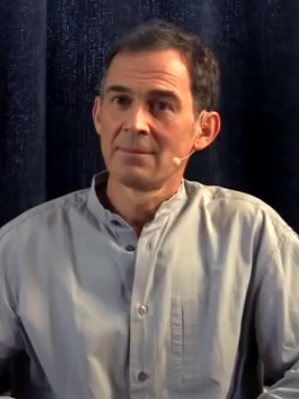
The Essence of Consciousness: Unveiling the Underlying Reality
Rupert Spira's assertion that "consciousness is the underlying reality of all experience" invites us to reconsider the very fabric of our existence. This statement suggests that beneath the myriad sensations, thoughts, and emotions we encounter lies a singular, unchanging essence: consciousness itself. Understanding this concept is not merely an intellectual exercise; it holds profound implications for how we perceive our lives, our relationships, and our connection to the universe.
In a world often dominated by external distractions and the relentless pursuit of material success, Spira's words serve as a gentle reminder to turn inward. By recognizing consciousness as the foundation of all experience, we can cultivate a deeper awareness of ourselves and the world around us. This shift in perspective encourages us to explore the nature of our thoughts and feelings, ultimately leading to a more authentic and fulfilling existence.
The image / the metaphor
At the heart of Spira's quote lies a vivid metaphor: consciousness as the underlying reality. The term "underlying" evokes a sense of depth, suggesting that consciousness is not merely a surface phenomenon but rather the bedrock upon which all experiences are built. This imagery invites us to visualize consciousness as a vast ocean, with our thoughts and experiences as fleeting waves that rise and fall upon its surface.
Diving deeper into this metaphor, we can appreciate the dynamic interplay between consciousness and experience. Just as the ocean remains constant despite the ever-changing waves, consciousness endures through the fluctuations of our thoughts and emotions. This understanding encourages us to cultivate a sense of stability and peace, recognizing that our true nature is not defined by the transient experiences we encounter but by the unchanging essence of consciousness itself.
In the speaker's tradition
Rupert Spira's teachings are rooted in the non-dual tradition, which emphasizes the interconnectedness of all existence. Concepts such as *advaita* (non-duality) and *sunyata* (emptiness) resonate deeply with his assertion about consciousness. In this framework, the distinction between self and other dissolves, revealing that our individual experiences are merely expressions of a singular, universal consciousness.
In texts such as the *Upanishads*, we find echoes of Spira's insights, particularly in the exploration of *Brahman* as the ultimate reality. The *Upanishads* invite us to realize that our true self (Atman) is not separate from this universal consciousness, but rather an integral part of it. This profound realization encourages us to transcend the illusion of separateness and embrace the unity that underlies all experience.
Living the teaching
Consider a modern scenario where the teaching of consciousness as the underlying reality can be applied: a moment of frustration during a hectic day at work. In such instances, we may find ourselves overwhelmed by stress and anxiety, perceiving these feelings as our reality. However, by recognizing that these emotions are temporary waves upon the ocean of consciousness, we can step back and cultivate a sense of detachment, allowing us to respond with clarity and calmness rather than react impulsively.
This teaching can also be transformative in our relationships. When faced with conflict or misunderstanding, we often become entangled in our perspectives, believing our thoughts and feelings to be the ultimate truth. By remembering that consciousness is the shared foundation of our experiences, we can approach these situations with empathy and openness, fostering deeper connections and understanding with others. This shift allows us to navigate the complexities of human interaction with grace and compassion.
A reflection
As we contemplate Spira's assertion that consciousness is the underlying reality of all experience, we are invited to explore our own relationship with this concept. How often do we identify with our thoughts and emotions, forgetting the deeper essence that connects us all? In moments of stillness, we can ask ourselves: What lies beneath my current experience, and how can I cultivate a greater awareness of the consciousness that unites us?



Join the BrightStar Community
Stay connected with daily inspiration, event announcements, and community wisdom