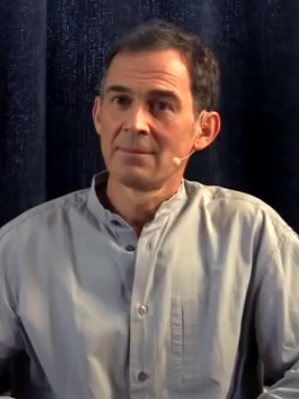
The Depth of Awareness: Unveiling the Underlying Reality
Rupert Spira's assertion that "Awareness is not a state. It is the underlying reality of all states" invites us to reconsider our understanding of consciousness and existence. This profound statement challenges the common perception of awareness as a fleeting experience or a temporary condition. Instead, it posits awareness as the fundamental essence that permeates all states of being, whether they are joyful, sorrowful, tranquil, or chaotic. Recognizing this distinction is crucial, as it opens the door to a deeper understanding of our true nature and the nature of reality itself.
In a world often dominated by transient experiences and emotional fluctuations, Spira's words serve as a gentle reminder of the stability that lies beneath the surface. By acknowledging awareness as the constant backdrop to all states, we can cultivate a sense of inner peace and resilience. This perspective not only enhances our personal well-being but also fosters a more profound connection to the world around us. The exploration of awareness as an unchanging reality invites us to engage with life more fully, transcending the limitations imposed by our conditioned responses and perceptions.
The image / the metaphor
At first glance, the quote presents a dichotomy between 'awareness' and 'states,' suggesting a layered reality where awareness serves as the foundation. The choice of the word "underlying" evokes an image of a vast, unshakeable ground beneath the shifting sands of our emotional and mental states. This imagery resonates with the idea of a deep ocean beneath the surface waves, where the tumult of life’s experiences can be likened to the waves that rise and fall, yet do not disturb the ocean's depth. The verbs "is" and "are" in the quote emphasize a sense of permanence and existence, contrasting sharply with the transient nature of states.
Diving deeper into this metaphor, we can perceive awareness as a vast sky that holds the clouds of our thoughts and feelings. Just as the sky remains unchanged regardless of the weather, awareness remains constant despite the fluctuations of our inner and outer worlds. This understanding encourages us to shift our focus from the ephemeral nature of our experiences to the enduring essence of awareness itself. In doing so, we can cultivate a sense of equanimity, recognizing that while states may come and go, the awareness that observes them is ever-present and unaltered.
In the speaker's tradition
Rupert Spira's teachings are deeply rooted in the non-dual tradition, which emphasizes the interconnectedness of all existence and the illusion of separation. Concepts such as *advaita* (non-duality) and *sunyata* (emptiness) resonate with the essence of Spira's assertion. In this context, awareness is not merely a personal experience but the universal consciousness that underlies all phenomena. This perspective aligns with the teachings of sages like Ramana Maharshi and Nisargadatta Maharaj, who similarly emphasized the importance of recognizing our true nature as awareness beyond the confines of individual identity.
In his work, Spira often references the idea of *kenosis*, or self-emptying, which invites us to let go of our attachments to transient states and identities. This aligns with the Buddhist concept of *anatta*, or non-self, which teaches that clinging to the self leads to suffering. By understanding awareness as the unchanging reality, we can engage in a process of letting go, allowing ourselves to experience life more fully without being ensnared by the ever-changing states of our minds and emotions. This transformative insight encourages a shift from identification with the mind to a recognition of the deeper awareness that observes all experiences.
Living the teaching
Consider a modern scenario where an individual faces a challenging situation at work, perhaps a conflict with a colleague. In this moment, the emotional states of frustration, anger, or anxiety may arise, clouding their judgment and leading to reactive behavior. However, by remembering Spira's teaching, the individual can pause and recognize that these emotions are merely states arising within the vastness of awareness. This shift in perspective allows them to respond with clarity and compassion, rather than reacting impulsively from a place of emotional turmoil.
In a different context, imagine a relationship where misunderstandings frequently lead to conflict. By applying the understanding of awareness as the underlying reality, both partners can learn to step back from their immediate emotional reactions. Instead of becoming entrenched in their respective states of hurt or frustration, they can cultivate a shared awareness that transcends these temporary feelings. This practice of recognizing the deeper awareness within themselves and each other fosters a more profound connection, allowing for healing and understanding to emerge amidst the challenges of relational dynamics.
A reflection
As we contemplate Rupert Spira's profound assertion, we are invited to explore the nature of our own awareness. How often do we find ourselves entangled in the transient states of our emotions and thoughts, forgetting the deeper reality that underlies them? In moments of difficulty or joy, can we pause to recognize the awareness that observes these states without judgment? This contemplation invites us to cultivate a deeper relationship with our own awareness, encouraging us to live from this unchanging essence rather than the fleeting experiences that often dominate our lives.



Join the BrightStar Community
Stay connected with daily inspiration, event announcements, and community wisdom