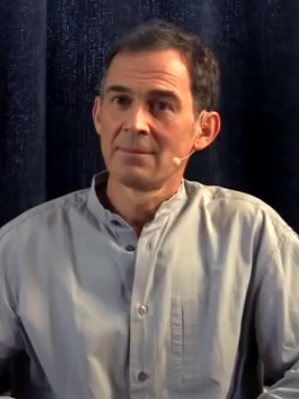
The Simplicity of Being: An Exploration of Awareness
Rupert Spira's assertion that "to know that one is is the simplest experience" invites us to reflect on the profound yet often overlooked essence of existence. In a world filled with complexities and distractions, this statement serves as a gentle reminder of the fundamental nature of awareness. It beckons us to return to the simplicity of being, to recognize that our existence itself is a source of profound insight and understanding. This exploration is not merely philosophical; it has the potential to transform our daily lives and deepen our connection to ourselves and the world around us.
As we delve deeper into this quote, we uncover layers of meaning that resonate with the core of non-dual philosophy. The simplicity of knowing that we exist transcends the myriad thoughts and emotions that often cloud our perception. It invites us to experience life from a place of pure awareness, unencumbered by the narratives we construct around our identities. This realization is not just an intellectual exercise; it is an invitation to embody a state of being that is inherently peaceful and profoundly liberating.
The image / the metaphor
At its surface, the quote evokes a sense of clarity and immediacy. The phrase "to know that one is" suggests a direct, unmediated experience of existence. The verbs chosen—"know" and "is"—imply a state of awareness that is both active and passive. It is an acknowledgment of being that does not require elaborate explanations or justifications. This simplicity is akin to the stillness of a calm lake, reflecting the sky without distortion, inviting us to experience our own nature in its purest form.
Diving deeper into the metaphor, we can see that this awareness of being is not merely an intellectual acknowledgment but a felt experience. It is the recognition of our presence in the world, a state of being that is often overshadowed by the complexities of thought and emotion. This simplicity is a gateway to deeper understanding, where the layers of identity and narrative fall away, revealing the essence of who we truly are. In this space, we can begin to appreciate the richness of existence without the clutter of conceptualization.
In the speaker's tradition
Rupert Spira's teachings are rooted in the non-dual tradition, which emphasizes the interconnectedness of all beings and the illusion of separation. Concepts such as *sunyata* (emptiness) and *fana* (annihilation of the self) resonate deeply with the idea of recognizing one's existence as a simple yet profound experience. In this context, the act of knowing that one is becomes a doorway to understanding the nature of reality itself, where the self dissolves into the greater whole, revealing the unity that underlies all existence.
In his work, Spira often references the notion of *prajna*, or wisdom, which arises from direct experience rather than intellectual understanding. This aligns with the quote, as the simplest experience of being is not a concept to be understood but a reality to be lived. Texts such as the *Upanishads* echo this sentiment, inviting seekers to explore the depths of their own consciousness and discover the truth of their being beyond the confines of thought and identity.
Living the teaching
Consider a modern scenario where the teaching of simply knowing that one is can be applied: imagine a busy professional overwhelmed by the demands of work and life. In the midst of deadlines and responsibilities, taking a moment to pause and acknowledge one's existence can be transformative. This practice of grounding oneself in the present moment allows for a shift in perspective, where the chaos of external circumstances fades, and the simplicity of being comes to the forefront. It is in this space that clarity and calm can emerge, enabling more thoughtful responses to life's challenges.
A reflection
As we contemplate Rupert Spira's assertion, we are invited to consider a contemplative question: What does it mean for me to simply be? This inquiry encourages us to explore the layers of our own existence, to peel back the complexities and distractions that often obscure our awareness. In this exploration, we may discover that the essence of our being is not found in our achievements or roles but in the quiet recognition of our presence in the world. Embracing this simplicity can lead to a profound transformation in how we relate to ourselves and others, opening the door to a deeper understanding of life itself.


Join the BrightStar Community
Stay connected with daily inspiration, event announcements, and community wisdom